


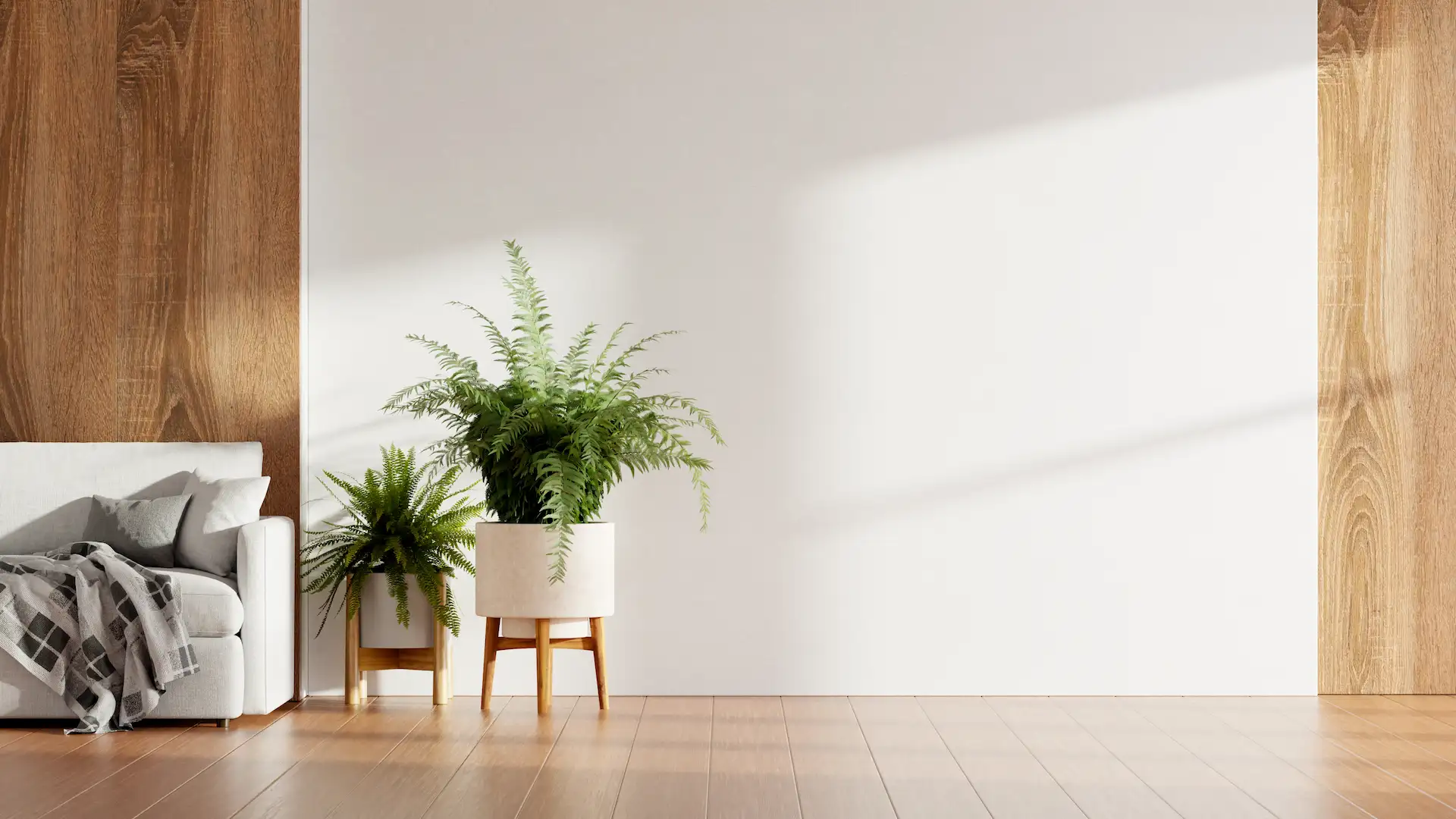
By now, your Fabulous Ferns have probably been inside for about a month. If you followed our guide to bringing your tropicals indoors, you gave them a bright spot and kept the soil damp. So why are some of those fronds starting to look crispy?
Blame the furnace. Once the heat comes on, the air in your home gets far drier than any fern would choose. The good news is that a few small changes go a long way, and a well-cared-for fern can look just as lush in February as it did on the porch in July.
In this article, we’ll cover why winter is hard on ferns, where to put them, how to add humidity, and how to read the signs when something isn’t right.
Table of Contents
Why Your Ferns Struggle Once the Furnace Is On
In nature, ferns grow on shady forest floors where the air stays cool and damp. Most are happiest with humidity around 50% or higher, but a heated home in winter often sits closer to 20–30%.
That dry air pulls moisture out of every frond faster than the roots can replace it. Add shorter days and weaker sunlight, and your fern is dealing with two big changes at once. It isn’t a sign you’ve done anything wrong. It just needs a little extra help this season.
Finding the Right Spot for Your Hanging Basket
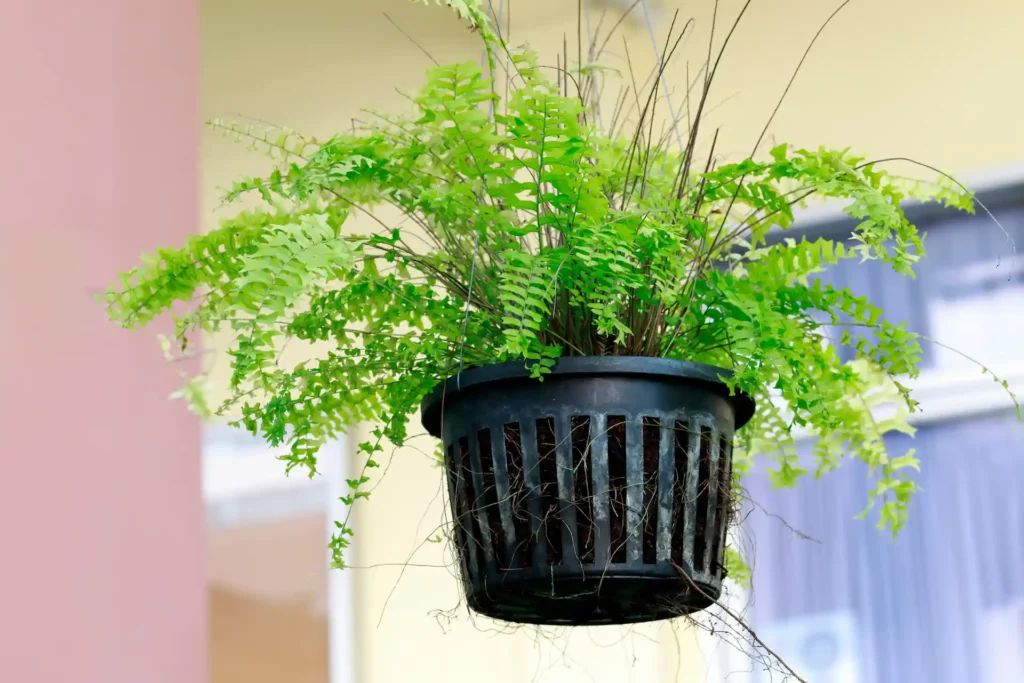
Your Fabulous Ferns want bright, indirect light and steady temperatures between 60–70°F. A few feet back from an east- or north-facing window is ideal, or behind a sheer curtain in a south or west window. Keep them away from:
- Heat vents and radiators. This is the big one. Warm, dry air will crisp a fern in a matter of days.
- Fireplaces and drafty doors. Too much heat or a cold blast can both damage tender new growth.
- Dark corners. Too little light leads to thin, pale fronds and lots of shedding.
Give your basket a quarter turn every week or two so it grows in full and even instead of lopsided.
Humidity: Your Fern’s Best Friend
If you only change one thing this winter, make it the humidity. Try one or two of these:
Use a pebble tray. Set your fern’s pot on a shallow tray of pebbles and water, keeping the pot above the waterline. As the water evaporates, it creates a pocket of moist air right where your fern needs it.
Group your plants. Plants release moisture as they grow, so hanging your fern near the Rio Dipladenia or Hawaiian Punch Hibiscus you brought in this fall helps everyone.
Run a humidifier. A small room humidifier is the most reliable fix in a very dry house, and your skin will thank you too.
Pick a steamy room. A bathroom with a bright window can be a fern’s winter paradise.
A light misting now and then is a nice treat, but the effect only lasts a few minutes. Think of it as a bonus, not your main plan.
Tip: An inexpensive hygrometer from the hardware store shows a room’s humidity at a glance, so you’ll know exactly where your fern will be happiest.
Watering and Feeding Through Winter

Ferns want their soil evenly moist all winter, never soggy and never bone dry. That’s a different rule from your dipladenias and hibiscus, which like to dry out between waterings, so keep your fern on its own schedule.
Check the soil every few days, and water when the top inch feels dry. Hanging baskets dry out faster than pots on a table, since warm air collects near the ceiling. The easiest way to water is to bring the basket to the sink, water slowly until it drains, and let it finish dripping before hanging it back up.
Hold off on fertilizer until spring. Your fern is growing slowly in the low light, and feeding it now only builds up salts in the soil. Start again in March or April, once fresh new fronds start to unfurl.
Reading the Signs: What Your Fern Is Telling You
First, so you don’t panic: a few dropped leaflets are completely normal, especially in the first weeks indoors. It’s only worth a closer look when the shedding doesn’t let up, or when you notice one of these:
Crispy brown tips. The classic sign of dry air. Move your fern away from heat sources and add humidity.
Heavy shedding. Usually too little light and humidity together. Try a brighter spot and boost the moisture.
Yellow fronds and soggy soil. Too much water. Let the top inch dry before watering again.
Pale, limp fronds and dry soil. Too little water. Give it a good soak at the sink.
Whatever the cause, snip off fully brown fronds at the base to keep your fern tidy and make room for new growth.
Ferns as Holiday Greenery
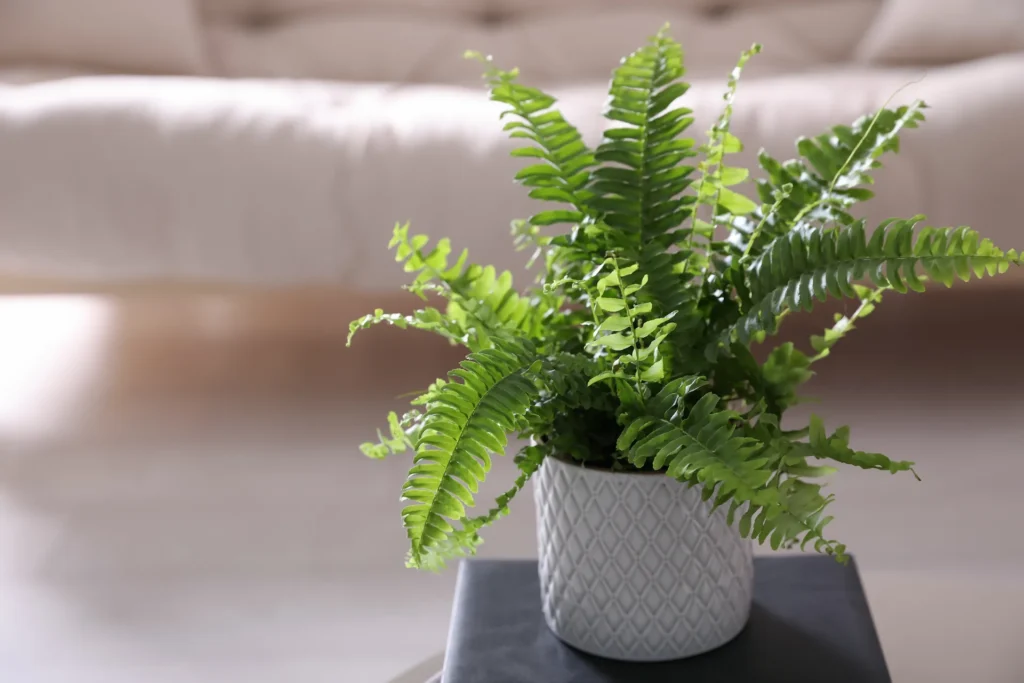
With the garden tucked in for the season, a lush fern brings some much-needed green indoors, and it’s a natural fit for holiday decorating.
Set it on a tall plant stand in the entryway so the fronds spill over the sides, or slip the pot into a woven basket with a ribbon and a few pinecones. Just keep it away from the fireplace, no matter how good it looks on the mantel!
There you have it! With the right spot, a boost of humidity, and steady watering, your Fabulous Ferns can stay full and green right through winter. Come spring, once nights are reliably above 50°F, they’ll be ready to head back out to the porch.
Ready for to care for a Fernlea Fern of your own? Visit our Fabulous Ferns page, or find a Fernlea retailer near you. Happy planting!